Introduction
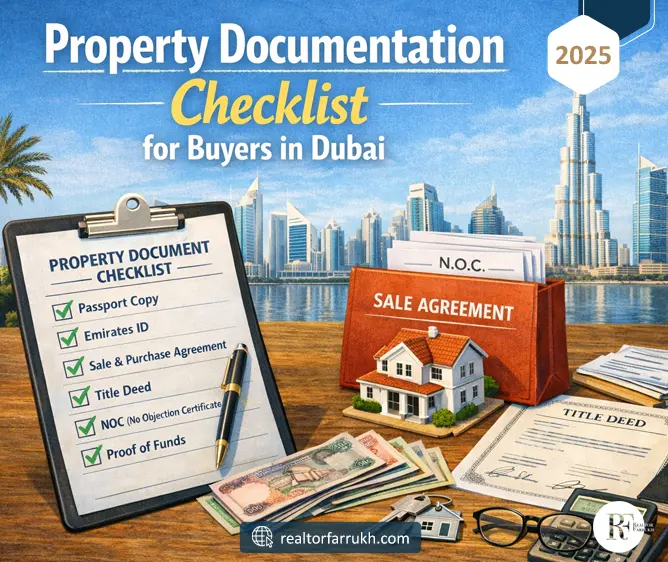
Buying property in Dubai is an exciting step, whether you’re an investor or a first-time homebuyer. However, understanding the property documentation in Dubai is crucial before you sign on the dotted line. Dubai’s real estate market is well-regulated, and both residents and foreign buyers need to prepare certain documents to ensure a smooth transaction. From personal IDs to official sale agreements, having a clear property purchase checklist will help you avoid delays and legal issues. In this guide, we break down all the documents required to buy property in Dubai and explain why each one matters. Whether you’re considering ready homes or exploring popular off-plan properties in Dubai (link to /off-plan/dubai), staying organized with paperwork is key to a successful purchase.
- Gather all documents to buy a property in Dubai early to prevent last-minute hurdles.
- Both local and foreign buyers must meet Dubai’s paperwork requirements (no special residency needed).
- A clear checklist of identification, financial, and legal documents ensures a smooth buying process.
Essential Identification Documents for Dubai Property Purchase
Every property transaction in Dubai starts with verifying the buyer’s identity. The primary document is a valid passport, which is required from all buyers (and usually from the seller as well). If you are a UAE resident, you will also need to provide your Emirates ID and a copy of your residence visa. These identification documents prove who you are and establish your eligibility to own property in designated areas. Notably, you do not need to be a UAE citizen or even a resident to purchase freehold property – foreign investors can buy property with just a passport in many areas. If you cannot be physically present to sign documents (for example, if you’re overseas), a legally notarized Power of Attorney can authorize someone to act on your behalf. Ensure any Power of Attorney is attested properly so it’s accepted in Dubai. By having all personal IDs ready and valid, you set a solid foundation for the rest of the property paperwork.
- Passport: The main identification document for all buyers (foreign or resident) – make sure it’s valid with clear copies.
- Emirates ID & Visa: Required if you reside in the UAE (these prove your local identity and status).
- Power of Attorney: Needed if another person will sign documents for you; must be notarized and, if issued abroad, attested for use in Dubai.
Financial Preparation and Mortgage Documents
Being financially prepared is as important as having your IDs in order. If you plan to finance the purchase with a mortgage, obtaining a mortgage pre-approval letter from a UAE bank should be one of your first steps. This letter confirms how much the bank is willing to lend you and is often required before finalizing a sale agreement. Even for cash buyers, proof of funds might be necessary - you should be ready to show recent bank statements or a bank certificate to demonstrate you can cover the purchase price and associated costs. Additionally, budget for the upfront payments: typically, a 10% down payment (deposit) is paid to the seller when signing the sale agreement for a resale property, or an initial installment for an off-plan property. Don’t forget the Dubai Land Department (DLD) fees, which are usually 4% of the property price (this fee is paid at the time of property transfer to register the sale). Having all these financial documents and plans in place not only speeds up the buying process but also gives sellers confidence in your offer. Many first-time buyers, especially those eyeing affordable options like off plan apartments in Dubai, find that early financial planning prevents surprises later on.
- Mortgage Pre-Approval: Secures your financing; strengthens your position if you’re taking a home loan.
- Proof of Funds: Bank statements or certificates to show you can pay the price and fees (vital for cash buyers and sometimes requested by developers or agents).
- Budget for Fees: Keep approximately 4% of the property value for DLD registration fees, plus smaller admin costs, ready in addition to the purchase price.
Key Transaction Documents: Sale Agreements, NOC, and Title Deed
Once your ID and finances are sorted, the focus shifts to the property paperwork needed to seal the deal. The sale agreement is a critical document – its form depends on the type of sale. For a ready (completed) property, buyer and seller sign a Memorandum of Understanding (MOU), officially known as Form F, which outlines all terms and conditions of the sale. In an off-plan sale (buying from a developer for a project under construction), the equivalent is the Sales and Purchase Agreement (SPA) provided by the developer, detailing the payment plan, completion date, and obligations of both parties.
Another essential piece of documentation is the No Objection Certificate (NOC) from the developer. An NOC is required before the property transfer can happen; it confirms that the seller has paid all outstanding dues (such as service charges or developer fees) and the developer has no objection to transferring the property to the new buyer. If you’re buying a resale property, the seller typically applies for this NOC, but as a buyer, you should ensure it’s obtained since the transfer can’t proceed without it.
Finally, the ultimate document you must secure is the Title Deed. For a completed property, the title deed is issued in your name at the Dubai Land Department on the transfer day, proving you are now the legal owner. Make sure all names and details are correct on the title deed. In cases of an under-construction property, you will receive the title deed upon the project’s completion (until then, the Oqood certificate serves as interim proof - more on this in the next section). All these documents are part of Dubai’s standard procedure to protect both buyer and seller, so double-check each one for accuracy and completeness.
- Sale Contract (MOU/SPA): Formal agreement documenting the property, price, and terms (MOU for secondary market or SPA for direct developer sales).
- No Objection Certificate: A letter from the developer confirming no outstanding seller liabilities - mandatory to proceed with the ownership transfer.
- Title Deed: The official ownership certificate issued by Dubai Land Department, which you receive once the property is registered under your name.
Off-Plan vs. Ready Property: Documentation Differences in Dubai
Off-plan properties (those still under construction or newly launched) come with a slightly different paperwork timeline than ready-to-move-in homes. If you purchase an off-plan property, you won’t get a title deed immediately. Instead, after signing the developer’s SPA and paying the initial fees (including the 4% registration fee to DLD), the sale is registered through the DLD’s online system, and you receive an Oqood certificate. The Oqood certificate is essentially an interim title that records your ownership of the off-plan unit during the construction phase. It ensures your purchase is legally recognized and protects your rights until the building is finished. Once the project is completed and handed over, the Oqood entry is converted into a permanent Title Deed in your name.
For completed (ready) properties, the process is quicker: after signing the MOU and obtaining the NOC, you and the seller meet (often at a DLD Trustee office) to transfer the property. You pay the remaining amount, the 4% DLD fee, and other charges, and the Title Deed is issued on the spot or within a few hours, showing you as the new owner.
It’s also advisable for off-plan buyers to do some extra due diligence as part of their document checklist. Verify that the developer and project are registered with RERA (Dubai Real Estate Regulatory Agency) and that an escrow account is in place for your payments. While these aren’t physical documents you provide, confirming them will safeguard your investment in Dubai off-plan real estate. In summary, the core documents (ID, sale agreements, etc.) remain similar for off-plan and ready purchases, but the key difference lies in when you receive your title. No matter if you’re purchasing a small apartment or an upscale off-plan villas in Dubai, being aware of these differences helps you manage expectations during the buying process.
- Oqood (Off-Plan Registration): Issued for off-plan purchases after signing the SPA - it’s a temporary proof of ownership until the home is built.
- Immediate Title Deed (Ready Property): Issued upon transfer for completed properties, giving you full legal ownership right away.
- Due Diligence: Off-plan buyers should check project registration and escrow details, ensuring the development is approved, and your payments are protected.
Summary / Final Advice
Navigating Dubai property paperwork may seem complex at first, but with the right preparation, it becomes much more manageable. Always start by organizing your personal documents and confirming your finances. Approach the buying process step by step: first, secure your IDs and funds, then proceed to signing agreements and fulfilling legal requirements. It’s wise to double-check every document on this checklist for accuracy - for instance, confirm that your name and property details are correct on all forms and certificates. If you’re unsure about any paperwork, consider consulting a qualified real estate agent or legal advisor to guide you (while not mandatory, their experience can help first-timers avoid mistakes). Dubai’s system is efficient and transparent, so long as you follow the official steps. In the end, being thorough with your documentation means you can focus on the exciting part - getting the keys to your new property - without unnecessary delays or surprises.
- Be Prepared: Start early by collecting copies of IDs, financial statements, and any approvals so you’re ready when it’s time to transact.
- Double-Check Documents: Mistakes on a contract or missing signatures can delay your transfer - review everything carefully before submission.
- Stay Informed: Keep yourself updated on the process (fees, required forms) and don’t hesitate to seek professional help for a smooth property purchase checklist Dubai experience.
FAQs
Q: What documents are required to buy property in Dubai?
A: The main documents include your passport (and Emirates ID for residents), a signed sale agreement (MOU or SPA), a No Objection Certificate from the developer, proof of payment of the 4% DLD fee, and finally, the Title Deed issued in your name. If you’re using a mortgage, you’ll also need a bank pre-approval and related finance papers.
Q: Do I need a UAE residency visa to buy property in Dubai?
A: No, you do not need to be a resident or have a UAE visa to purchase property in Dubai. Foreigners can buy freehold properties with just a valid passport. Residency status is not required for the purchase, though buying property above a certain value may later make you eligible for a residence visa if you choose to apply.
Q: What is a No Objection Certificate (NOC) in real estate transactions?
A: A No Objection Certificate is a letter from the property’s developer stating they have no objections to the sale and that the seller has cleared all outstanding fees or service charges. It is required before the Dubai Land Department transfers the property to a new owner. Essentially, the NOC ensures the developer or community has no dues left unpaid by the seller.
Q: What is an Oqood certificate for off-plan property?
A: An Oqood certificate is an interim ownership document for off-plan properties in Dubai. When you buy a property that’s still under construction, the sale is registered with the Dubai Land Department’s Oqood system. The Oqood certificate confirms your ownership rights during the construction phase. Once the property is completed, this gets replaced by the official Title Deed in your name.
Q: Can I use a Power of Attorney to purchase a property on my behalf in Dubai?
A: Yes, buying through a Power of Attorney (POA) is allowed in Dubai. You must appoint a trusted person as your attorney and have the POA document notarized. If the POA is created outside the UAE, it needs to be attested and legalized for use in Dubai. This document lets your representative sign the sale documents and complete formalities if you cannot be present, but it should be specific about the powers granted for the property transaction.
Q: Are there any additional fees or taxes when buying property in Dubai?
A: The major fee is the Dubai Land Department (DLD) transfer fee, which is 4% of the property price, paid at the time of transfer. There are also small administrative fees for the issuance and registration of the title deed at the registration trustee's office. Dubai does not have annual property taxes, so after the one-time purchase costs, ongoing expenses are usually limited to maintenance fees or service charges for your property.